
The people leaning into AI the fastest aren't "AI teams."
They're Product Managers.
Not because PMs suddenly want to become engineers.
But because modern product work now demands something most organizations still don't have: someone who can translate strategy into execution with measurable business outcomes.
That professional archetype is emerging in plain sight.
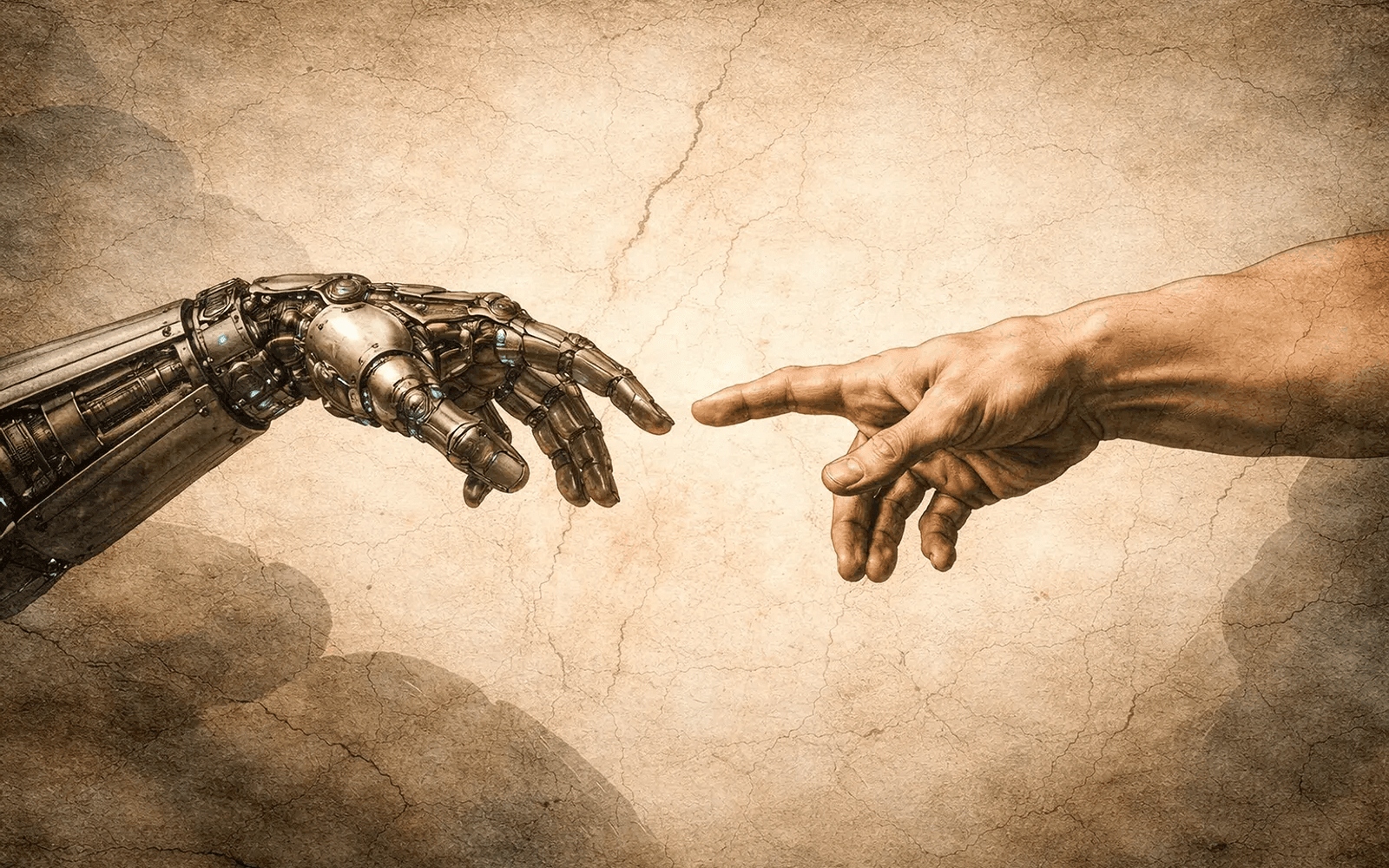
Product Managers are becoming AI Architects.
They bridge:
- Business outcomes (revenue, margin, cost-to-serve, risk)
- Product strategy (what to build, for whom, and why now)
- Execution reality (people, timelines, constraints)
- AI enablement (where AI fits, what it can reliably do, and how adoption happens)
And the data backs it up.
- 79% of Product Managers now have project management experience (PMI)
- 92% of product leaders are accountable for revenue (nearly double from 2022) (Airtable)
- 55% of product leaders are investing in AI to enhance decision-making (Airtable)
- 61–90% of organizations fail to execute their strategies successfully (NOBL)
That last stat is the whole game.
Most companies don't fail because they lack ideas.
They fail because they can't translate conviction into delivery.
That's the gap WorkLearn Labs was built to close.
The Real Shift: PM + Execution + AI = A New Role
Product management used to be a discipline.
Now it's becoming a system.
As organizations tighten budgets and demand ROI, the old separation of duties collapses:
- "PM defines what we should do."
- "Project team figures out how and when."
- "Data or AI team builds something later."
In reality, these handoffs are where projects die.
PMI research shows the convergence clearly:
- 92% of product managers agree project management skills are useful (PMI)
- When asked which role their skills most closely align with, 54% chose project management (PMI)
The industry is describing the same evolution with different labels:
- Full-Stack Product Manager
- Mini-CEO PM archetype
- Commercially-accountable PM
We call this archetype an AI Architect: someone who can quantify business value, design AI systems, and bridge strategy and implementation.
Or said differently:
A PM who doesn't just pitch the roadmap, but can defend the business case, scope the build, and enable adoption.
ROI Is Now Mandatory (And Most Teams Still Can't Do It)
The biggest change in product over the last 24 months is simple:
Every investment now has to justify itself.
The "feature factory" era is over. When building gets easier, the differentiator becomes choosing the right outcomes and proving the ROI.
Modern PM teams are adopting finance-grade prioritization frameworks:
- RICE scoring (Reach × Impact × Confidence ÷ Effort)
- Cost of Delay (quantifying opportunity cost)
- Value vs Effort matrices
- WSJF (economic sequencing)
- Desirability / Feasibility / Viability frameworks
But there's a painful truth hiding in the numbers.
Even though 92% of product leaders are accountable for revenue, only 26% report very high visibility into ROI of their product launches. (Airtable)
So PMs are being asked to own outcomes, without having the tooling to consistently quantify outcomes.
That's why the "AI Architect" shift matters.
AI Architects don't just prioritize.
They build defensible business cases.
They make assumptions explicit.
They connect delivery plans to financial outcomes.
AI Tools Are Turning PMs Into Outcome Engineers
AI is not only changing what teams build.
It's changing who can do the analysis.
McKinsey measured a 40% productivity improvement for product managers using generative AI, largely by automating high-toil work like: (McKinsey)
- PRD drafting
- customer insight synthesis
- meeting summaries and follow-up
- backlog triage
- early feasibility exploration
The best teams are reinvesting that saved time into the work that actually moves the needle:
- framing problems in business terms
- testing assumptions earlier
- quantifying value and cost
- aligning stakeholders around tradeoffs
AI doesn't make PMs less strategic. It finally gives them time to be strategic.
The Strategy–Execution Gap Is the Real Market Opportunity
Harvard Business Review reports companies deliver only 63% of the financial performance their strategies promise.
McKinsey estimates mismanaged strategy implementation can cost up to 10% of annual revenue. (NOBL)
Executives already know this.
That's why so many organizations are desperate for people who can translate vision into implementable work.
As Forrester puts it: "Great product managers engage in strategic thinking and execution every day."
The problem is time.
97% of senior leaders say being strategic is critical.
96% say they don't have time for strategic thinking.
AI Architect workflows shrink the time from idea → decision → delivery.
Not by skipping rigor, but by automating the work that blocks rigor.
What an "AI Architect PM" Actually Does
An AI Architect is not a title. It's a capability stack.
They can walk into a meeting and answer:
- What business outcome are we driving?
- How will we measure it?
- What assumptions are we making?
- What's the cost to deliver?
- What's the payback period?
- What are the risks (data quality, adoption, governance)?
- What's the simplest viable implementation path?
This is not "more work." This is the work that prevents wasted work.
And it aligns with what AI architecture actually is: bridging business needs and technical capabilities, while managing change, ethics, governance, and adoption.
Where WorkLearn Labs Fits
WorkLearn Labs exists to operationalize this AI Architect approach.
We help PMs and product leaders:
- quantify business value (ROI, savings, cost-to-serve, revenue uplift)
- design AI systems (what to automate, what to augment, where constraints live)
- bridge the translation gap (turn strategy into a build plan that teams can execute)
In minutes, you can generate:
- a quantified business case
- a viability and risk analysis
- a cost and timeline estimate
- an implementation plan
One user put it simply:
"We spent $10K and a week with a consultancy firm. Your tool delivered the same recommendations in less than a minute."
That's what happens when you stop separating strategy from execution.
PMs Don't Have to Become AI Experts. They Need to Become Better Translators.
Product Managers won't be replaced by AI, but PMs who can't quantify value, frame systems, and connect decisions to outcomes will struggle.
The market is moving toward:
- commercial accountability
- full-stack execution
- AI-enabled leverage
That combination produces a new archetype: the AI Architect PM.
Not a replacement for product management. Its evolution.
If you're a PM who wants to lead the next era, the path is clear:
Stop shipping features. Start shipping outcomes.
WorkLearn Labs is building the operating system to make that practical.
About the Author
Amadeu Ferreira is the founder of WorkLearn Labs. More than just a financial analyst and AI consultant, Amadeu is a strategist and builder who has been in the AI space for the past 7 years, building companies and leading technical teams to build and ship products. WorkLearn Labs is built through Highline Beta's venture studio.
Connect on LinkedIn